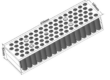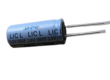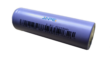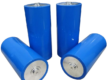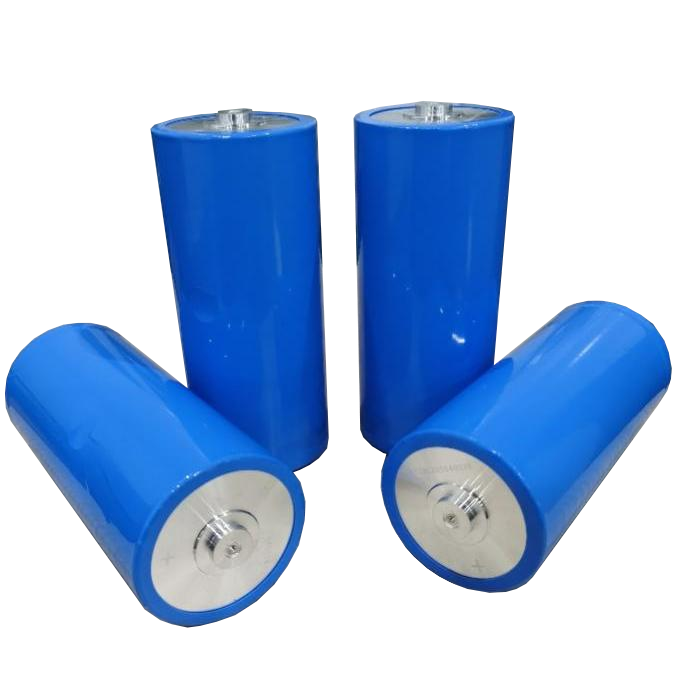
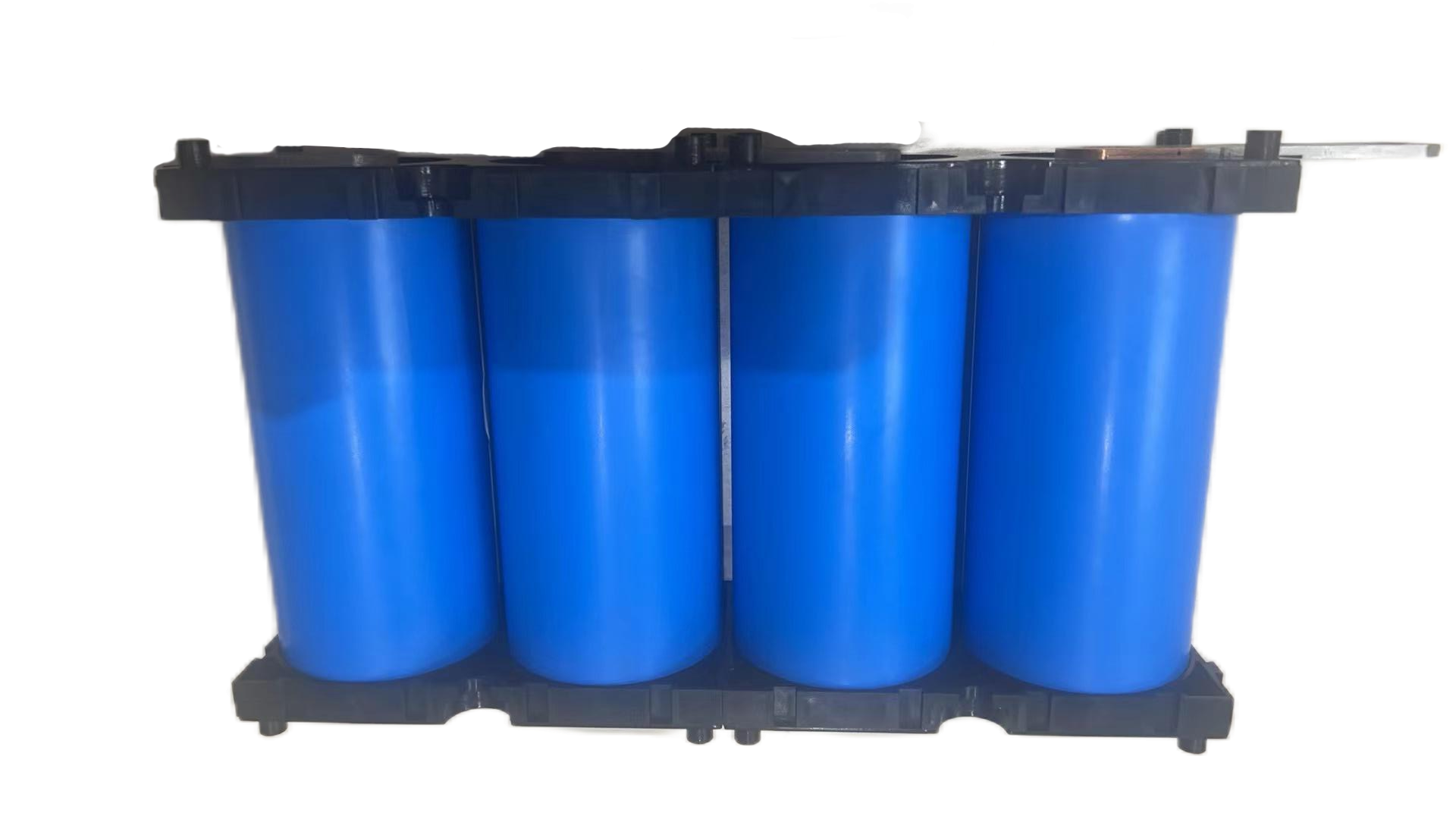
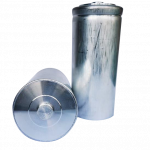
Litio -jona kondensilo -cilindro 15ah CKAA60140
 Jinpei Litio-jona kondensilo (LIC) estas nova tipo de elektra energio stokado aparato kiu kombinas la karakterizaĵoj de litio-jonaj kuirilaroj kaj superkondensiloj. Ĝi havas la avantaĝojn de alta energia denseco, alta potenco denseco, longa ciklo vivo, ktp.
Ĝi havas larĝan gamon de aplikoj en elektraj veturiloj, stokado de renovigebla energio, industriaj kaj hejmaj energistokaj sistemoj, same kiel elektronikaj aparatoj kaj konsumvaroj. Kun la daŭra progreso de teknologio kaj la plia redukto de kosto, oni atendas, ke ĝia merkata aplikado estos pli kaj pli vasta.
-
Introduction
This specification describes the properties, testing methods and notice of the 60140 Flash Charge Lithium ion capacitors developed by Jinpei Electronics Co., Ltd.
2. General Features
2.1 Features and Advantages
- Fast charge and discharge
- Longa ciklo vivo
- Good low temperature performance
- High energy density
2.2 Typical Applications
Using at Energy storage, Start and stop system,
smart grid, harbor machinery UPS and other power system.
3. Product Appearance & Dimensioj
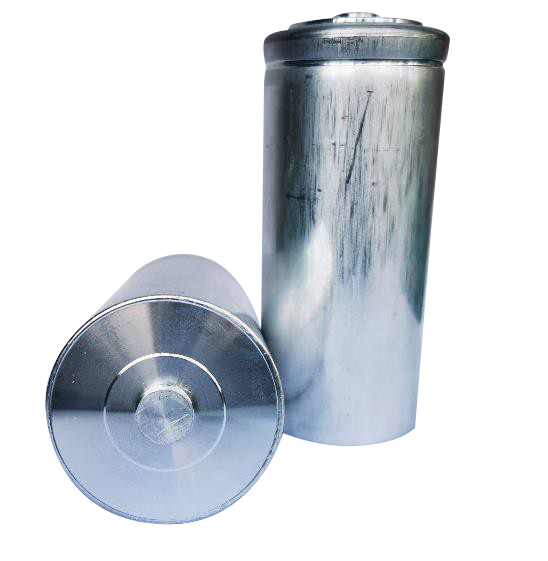
3.1 Structure & Appearance
4. Product Technical Index
4.1Main Parameters
|
Serioj |
Merits |
Values |
| 1 | Kapacitanco | 15Ah±5% |
| 2 | Volt-HI | 4.2V |
| 3 | Volt-LO | 2.5V |
| 4 | DC internal resistan(10ms) | ≤0.6mΩ |
| 5 | Standard charging current | 45A(3C) |
| 6 | Quick charging current | 150A(10C) |
| 7 | Rated discharge current | 45A(3C) |
| 8 | Max continuous discharge current | 300A(20C) |
| 9 | Max continuous discharge time | 90S |
| 10 | Max Temperature increasing | 50±5℃ |
|
11 |
Safety |
GB/T 31485-2015《 Electricvehicle Safety requirements and test
methods for power accumulators》 |
| 12 | Ŝarĝo&malŝarĝa temperaturo gamo | -40~85℃ |
| 13 | Stoka temperaturo gamo | -40~55℃ |
| 14 | Rapida ŝarĝa ciklo vivo (@25±2℃,
Forced cooling) |
≥30,000 times(5C) |
| 15 | Slow charging cycle life | ≥30,000 times (1C) |
| 16 | Pezo | ≤850g |
| 17 | Demension(D× H) | Φ60mm×140mm |
4.2 Other Technical Information
-
Low temperature discharge performance Low temperature discharge curves
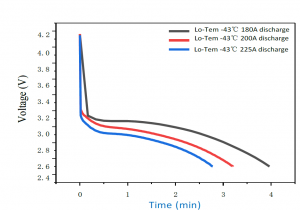
discharge current (A)
discharge time Discharge capacitance (mAh)
180 3min58s 11.89 200 3min12s 10.66 225 2min47s 10.44
Test method: at room temperature, 3C constant current charge to 4.2V, constant voltage to 0.05c cutoff, put in the low-temperature -43℃ environment for 3h, discharge to 2.5V cutoff with different current.
Charge/discharge charge/discharge curves
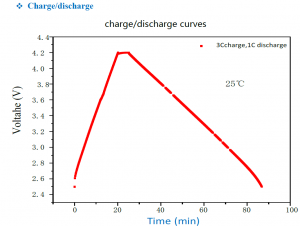
Test method: at room temperature, 3C constant current charge to 4.2V, constant voltage to 0.1c cut-off, use 2min, discharge current 1C to 2.5V cut-off.
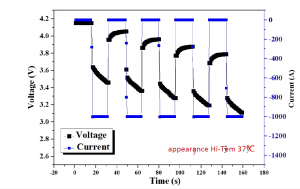
Charge/discharge @1000A Discharge curves at large current
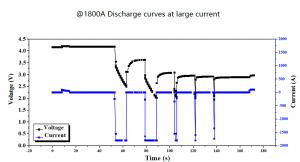
Testkondiĉo: 3C charge to 4.2V at normal temperature ,constant voltage to 0.2A cut-off , 1800A charge for 10s,15s interval after charge again,record test datasheet.
5 Testing Methods
5.1 Testing Conditions
This specification followed the standard testing criteria: 1 atm, 25±2 ℃ and a relative humidity < 65%.
5.2 Test for Capacitance/Internal resistance
Capacitance Test: Charge the cell to 4.2V by 1C current and the charge it by constant voltage until the current reached 0.1C. And then, discharge the cell to 2.5V at 1C current. After rested 30s , repeated the last processes and regarded the second capacitance as cell’s capacitance.
Resistance test: Charge the cell to 4.2V by 3C current and charge until 0.1C current by constant voltage, test it’s ACR at 1kHZ Ac impedance meter. By the way, once test its capacitance, recorded its 10ms voltage difference during the discharge process, and the calculated its DCR by R=ΔU/I. Notu: the mix record time is 1s during the “Capacitance and resistance test “proces
Test for Low Temperature
Under the ordered temperature, constant charge the cell to 4.2V and then end it at 0.1C by constant voltage. Post ĉi tio, remove the cell to different temperature condition (keep 2h) and discharge it to 2.5V at 1C current, record its discharge capacitance.Cycle life test
Under 25±5℃, test the cell’s original performance by “Capacitance/resistance method”, and then charge it to 4.0V by 5C current, discharge it to 2.5V at 2Cconstant current, after this rest 5min, cycle this processes 2000. Regarded the testing process at one cycle, and repeated it 15 fojojn, until it reached 30000 fojojn.
6 Notice
6.1 During Operation
- Working temperature of LIB should not exceed the upper and lower limits of the rated
- LIB should be used at rated
Check the polarity of LIB before power on. No reverse connecting.
Keep LIB away from heat. The temperature has a big influence on the working life of LIB(LIC).
Enkonduko
◆KAPACITACRANGO:
1100mAh/2300F, 1500mAh/3100F,1900mAh/4000F, 2500mAh/5200F
◆NOMITA TENSIO: 3.6V
◆Volt-HI:4.2V
◆Volt-LO:2.5V